Bangladeshi welders and fabricators: could Australia's skills gap be your next step?
Tips · 2026-10-10 · 4 min read
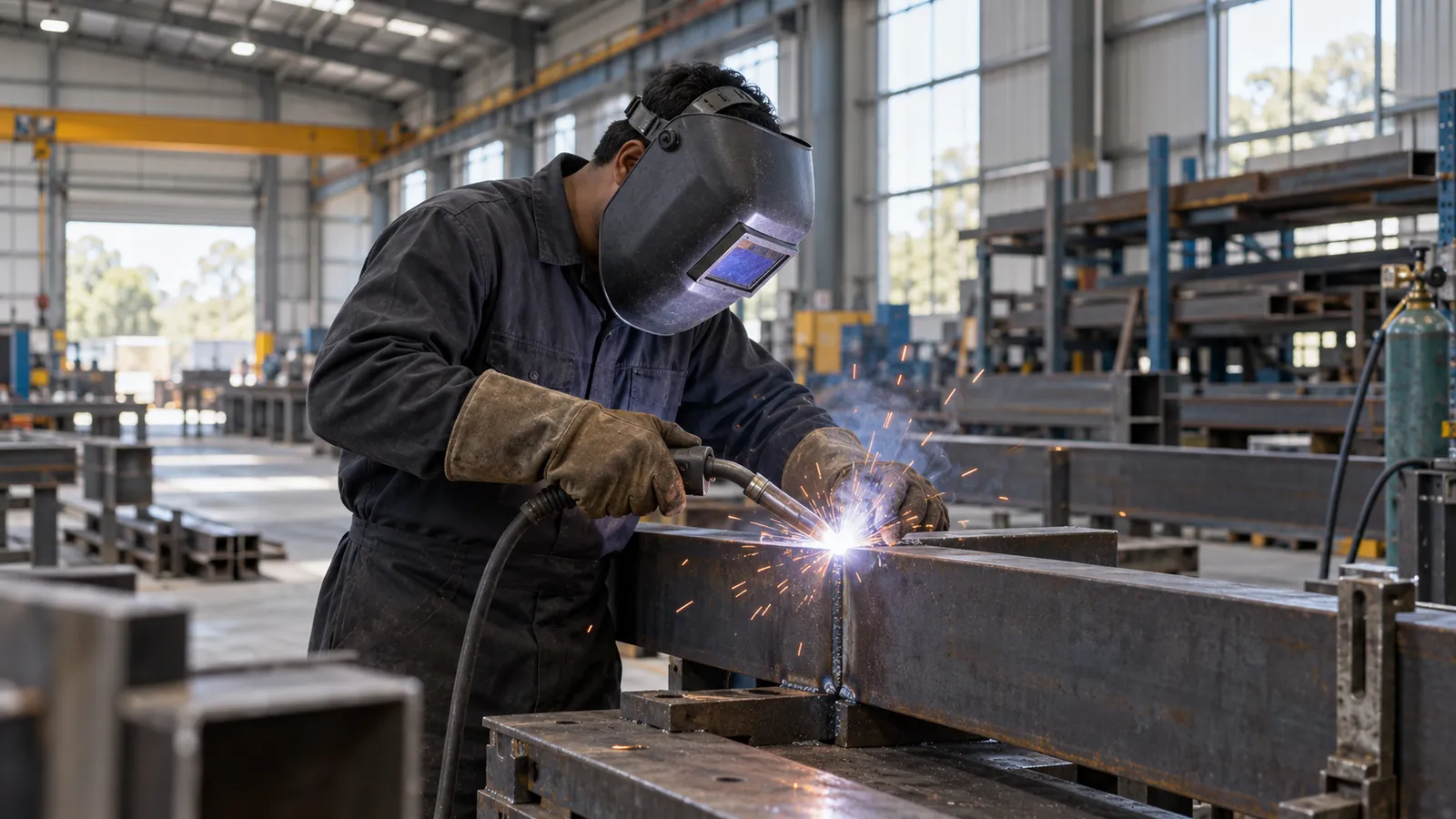
If you have spent years joining pipe in a Gulf refinery or cutting steel for a shipyard in Chattogram, a new picture from Australia deserves your attention. A 2026 survey of the country's welding and fabrication businesses found that 89.2 per cent of them believe Australia lacks enough qualified welders for the defence, infrastructure and renewable energy work it has planned. For a probashi tradesperson weighing up the next move, that is a signal worth reading carefully, not a promise.
Busy plans, quiet workshops
The same survey shows something that looks odd at first. Many workshops are not flat out today. Six in ten businesses had three months or less of confirmed work, one in five had nothing confirmed at all, and almost 60 per cent of fabrication shops were operating under 75 per cent of their capacity.
So how can there be a shortage? The answer is timing. Big public projects take years to plan and deliver, and the industry says too much fabricated steel for them is bought from overseas. Owners told the survey that both missing work and missing skilled staff were holding them back. When the large defence and energy builds move into full swing, the people with the right qualifications are expected to be the bottleneck.
What the industry is pushing for
Fabrication businesses want governments to send more project work to local workshops. Their main asks are:
- tougher local content rules on publicly funded projects
- independent checks on fabricated steel, no matter which country it comes from
- support for a proposed Australian Fabrication Authority
- help for small and medium firms to take up advanced manufacturing tools
- contracts judged on value over the whole life of a structure, not only the lowest starting price
These are proposals. None of them is law yet, and the outcome is up to federal and state governments.
Why quality standards matter to you
Compliance came up again and again. Around 71.4 per cent of businesses said imported fabricated products fail Australian standards at least some of the time, and 53.6 per cent said this happens often or very often. For a welder hoping to work there, the lesson is simple: employers care about people who know Australian welding standards and can prove their work meets them.
Pressure on costs, money into people
Workshops are squeezed, yet many are still spending on staff and equipment.
| What businesses reported | Share of respondents |
|---|---|
| Higher energy prices | 82.1 per cent |
| Higher material costs | 78.5 per cent |
| Raised their own selling prices | 28.5 per cent |
| Put more into staff training | 42.8 per cent |
| Put more into research and development | 39.2 per cent |
Half of the businesses also increased spending on technology. A workshop that trains its people and upgrades its machines is usually a good sign for anyone looking for a long-term job. The survey also found that 79.5 per cent felt welding is not respected as much as it should be, and the industry is working to lift the trade's profile.
Getting ready from Bangladesh
A shortage in one industry does not mean every welder will qualify for a visa. Occupation lists and visa settings change, so check the current skilled occupation list for your trade on the Department of Home Affairs website first. Then start on the paperwork that most overseas trade applications need:
- Your trade papers. Gather certificates, such as those from the Bangladesh Technical Education Board, along with letters from past employers describing the welding processes and materials you worked with. Trades are usually assessed again in Australia, so clear records help.
- English. If the visa or employer asks for a test, plan for IELTS or PTE early.
- Translations. Any document written in Bangla will need a certified English translation.
- Police certificate. If one is requested, apply for a Police Clearance Certificate from Bangladesh Police.
- Leaving for work. Before you fly out for an overseas job, complete your BMET emigration clearance.
One warning every Bangladeshi worker has heard but should hear again: never pay a dalal or anyone else who asks for money upfront to secure a job or a visa. Deal only with real employers and recruiting agencies you have checked yourself. For advice on your own case, the Department of Home Affairs website is the place to start.
Should you watch this trade?
Yes, closely. Australian workshops have room to grow but lack secured projects and enough qualified hands. If local content rules get stronger and the project pipeline fills, demand for skilled welders and fabricators who work to Australian standards could rise. Getting your documents in order now means you are ready if that door opens.
#welding #fabrication #australia #skills shortage #bangladeshi workers #skilled visa
 Senior manager in Bangladesh? Why Australia looks at your duties, not your job title
 Carpenter, bricklayer or tiler in Bangladesh? Why Australia's building sites need your trade
 No degree, strong trade? Why Australia may suit Bangladeshi electricians and builders