Australia could be 935,600 tradies short by 2035: what Bangladeshi workers should know
News · 2026-10-10 · 3 min read
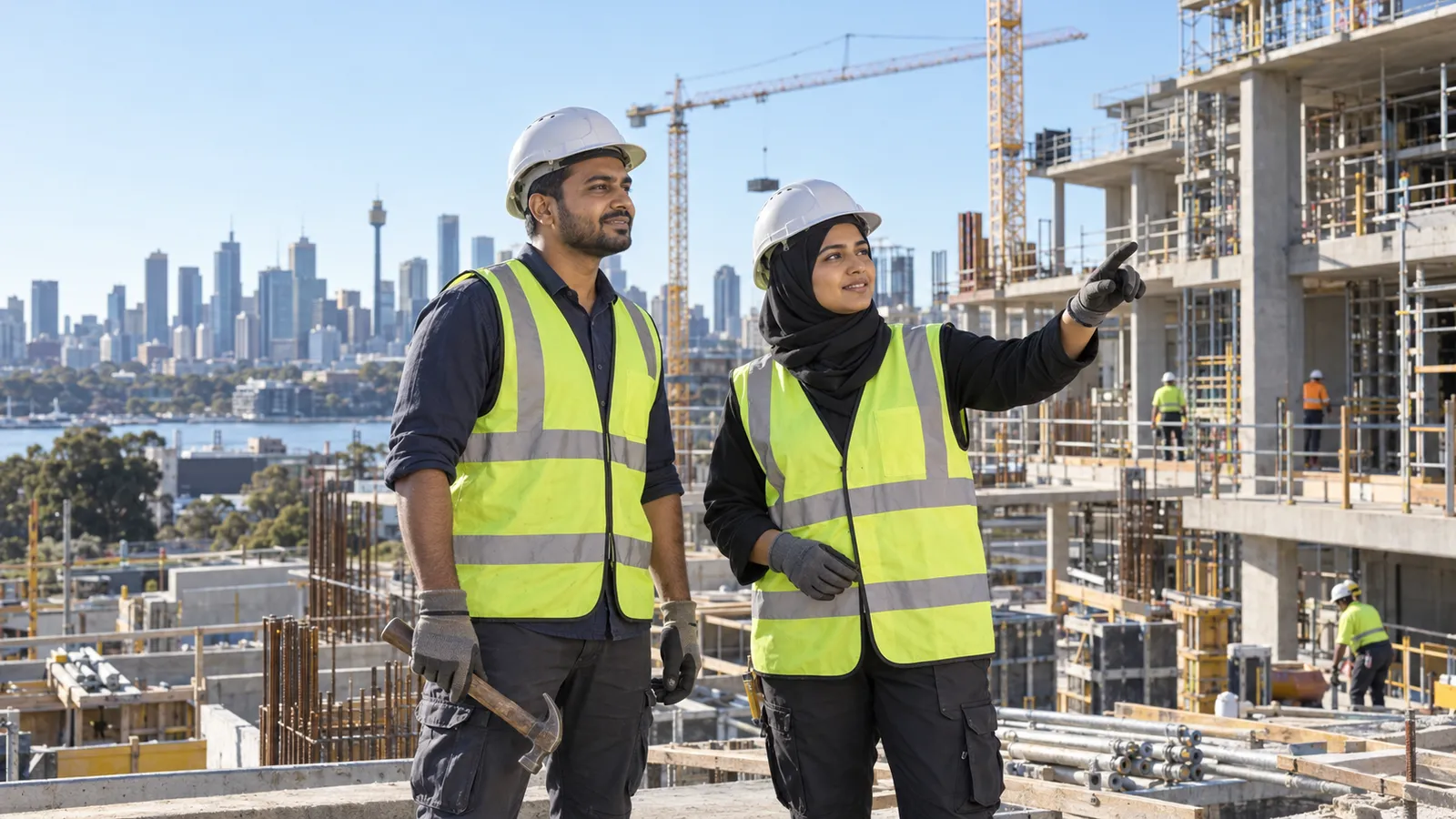
Australia has a building problem it cannot solve alone. A new industry report warns that, without major change, the country could be short of roughly 935,600 tradies and construction workers by 2035. For Bangladeshi carpenters, electricians, plumbers and civil workers thinking about bidesh, this is a figure worth understanding.
Even the best case in the report is uncomfortable. If every recommended reform went ahead, Australia would still be more than 84,000 workers short.
What is driving the shortfall
The builders' industry body behind the report calls it a structural problem: training is not keeping up with the work ahead. Around $242 billion of infrastructure spending is planned over the next five years, and on top of that sits a long shift to net-zero energy projects. Housing, rail, roads and renewable energy builds are all chasing the same limited pool of qualified people.
Separate modelling has already flagged a gap of 300,000 workers around 2027, when the national infrastructure pipeline is expected to peak. Demand is climbing while supply is shrinking, and migration is one of the few tools that can respond quickly.
Signs the door is opening
| Measure | What it shows |
|---|---|
| Skilled visas for construction workers | Tripled since 2019 |
| Skilled construction visas in 2024–25 | 15,524, the highest yearly total in a decade |
| Federal funding for faster skills recognition | $85 million this budget cycle, for migrants already in Australia |
| Support for new housing apprentices | A $10,000 incentive, plus wider Free TAFE access |
The government has said that more skilled migration sits beside local training as a core part of its response, not as a last resort.
Reading the numbers as a Bangladeshi tradesperson
First, this is long-term demand. A gap that runs to 2035 points to steady work in carpentry, electrical, plumbing, civil construction and related trades, not a short window that shuts when one project ends.
Second, skills recognition is getting more attention. The report says faster recognition for qualified workers already in Australia could unlock over 18,000 workers almost at once. Australia clearly wants to shrink the distance between being qualified overseas and being qualified to work there. For you, recognition is the step to plan first.
Third, policy is moving in a helpful direction. Higher visa numbers and new funding make this a reasonable time to start preparing, though none of it promises anyone a visa or a job.
Getting ready from Bangladesh
- Organise your trade certificates, for example from the Bangladesh Technical Education Board, and employer letters listing your duties and dates. Keep letters from Gulf or Malaysia projects too.
- Trades are usually assessed again in Australia, for example through Trades Recognition Australia or VETASSESS, depending on your trade.
- Get certified English translations of anything written in Bangla.
- Prepare for IELTS or PTE if your visa or employer asks for a score.
- Apply for a Police Clearance Certificate from Bangladesh Police when one is requested, and complete BMET emigration clearance before you leave for work.
Compare visa types on the official Australian visa listing, and never pay a dalal or anyone who asks for money upfront to "secure" a place for you.
A long runway for skilled Bangladeshi tradies
Australia's building plans are running far ahead of its own workforce, and even strong reforms will not close the gap alone. That is why skilled migration for tradies is treated as essential. For a qualified Bangladeshi worker with good papers, now is a good time to prepare carefully and look for genuine employers.
#construction #australia jobs #skilled visa #trades #skills recognition #bangladeshi workers
 No degree, strong trade? Why Australia may suit Bangladeshi electricians and builders
 Already working a trade in New Zealand? A new residence pathway may now fit you
 Bangladeshi plumbers: could New Zealand's shortage be your next step?